High-integrity industrial adhesives selected for high performance under the extreme climatic challenges of Southern Vietnam
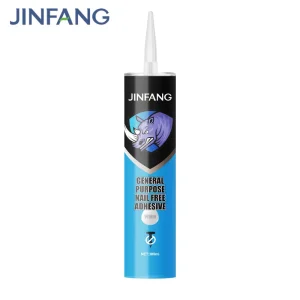
Ho Chi Minh City (HCMC), alongside the key industrial corridors of Binh Duong and Dong Nai, represents one of the fastest-growing construction markets in Southeast Asia. From iconic high-rise developments in District 1 and District 2 (Thu Thiem) to massive transit projects like Metro Line 1 and the development of the Thu Duc Smart City, modern architectural paradigms are changing rapidly.
However, building in Southern Vietnam introduces significant structural challenges. The hot and humid tropical monsoon climate, marked by a prolonged wet season and high average relative humidity (often exceeding 80%), imposes harsh requirements on building materials. Traditional mechanical fasteners (nails, expansion anchors) often accelerate galvanic corrosion in humid concrete or lead to localized stress fractures under temperature fluctuations.
Consequently, the local demand for advanced Nail-Free Glue (Construction Adhesives), Modified Silane (MS) Polymers, and high-movement Polyurethane (PU) sealants has experienced exponential growth. Modern contractors in Saigon are pivoting toward elastomeric bonding solutions to eliminate thermal bridging, distribute mechanical loads evenly across joints, and ensure moisture barrier integrity inside structural envelopes.
On a global scale, the adhesive and sealant industry is undergoing a structural transition driven by safety, environmental regulations, and structural life-cycle demands:

All adhesives must resist extreme UV index levels (10-12+), torrential downpours with rapid temperature drops from 36°C to 26°C, and concrete substrate moisture emission rates that can destabilize low-grade formulas.
In the highly competitive market of construction chemical compounding, the manufacturing source dictates the long-term reliability and viability of large scale real estate developments. Shandong Jinfang Adhesive Industry Co., Ltd., strategically headquartered in China's industrial heartland of Shandong Province, exemplifies the compounding and cost advantages of modern Chinese chemical manufacturing.
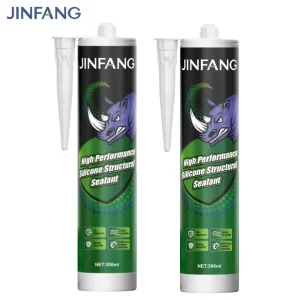
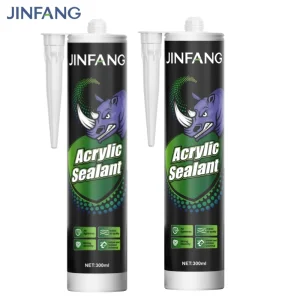
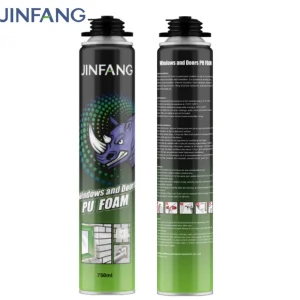
With an integrated production facility, Jinfang controls every critical stage of the supply chain—from raw material formulation, automated prepolymer synthesis, and precision cartridge injection molding, to high-speed automatic filling lines. This vertical integration allows us to significantly reduce costs while maintaining absolute quality control across every batch of silicone, PU foam, MS polymer, and nail-free glue.
We believe that sustained market leadership requires continuous scientific innovation. Jinfang maintains close, long-term research partnerships with leading Chinese institutions, including:
Backed by this academic framework, our technical team tailors chemical formulations to meet the specific environmental stresses of Saigon, ensuring our adhesives outperform standard products under tropical monsoon cycles.
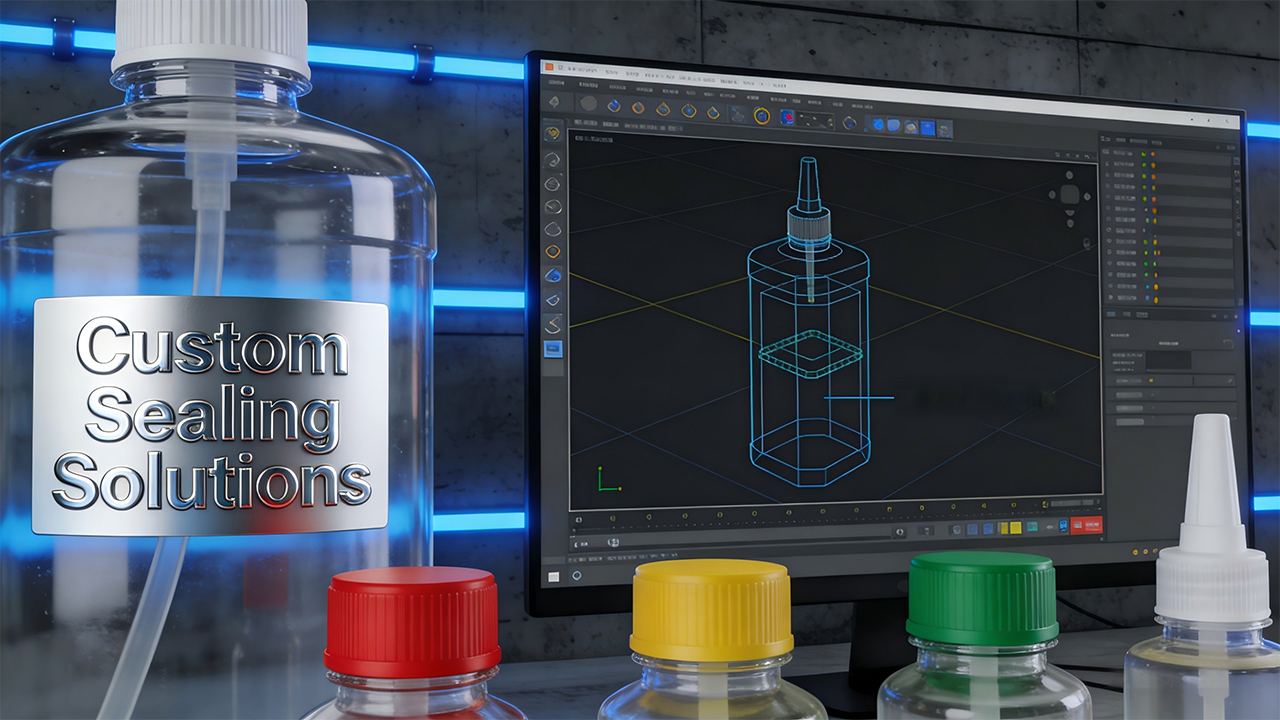
Our systems are certified under ISO 9001 and ISO 14001. We maintain full compliance with the European Union IROS (International Regulatory Standards) ensuring all products exported to Vietnam and Europe adhere to strict chemical safety regulations.
Countries Supplied and Welcomed Across Europe, Asia, and South America
Average Factory Lead-Time from Production Formulation to Ocean Port Loading
Repeat Contract Rate Reflecting Long-Term Industrial Partner Trust & Stability
How Shandong Jinfang adhesives solve real-world engineering challenges across Southern Vietnam's urban construction projects
High-wind shear forces and sudden tropical storms in HCMC District 1 demand structural glazing silicones and MS polymers with superb elongation recovery (±50% joint movement capability) and extreme UV stabilization to prevent weathering and leakage over decades.
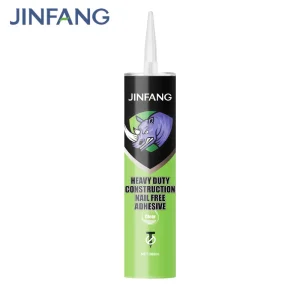
Saigon's residential towers utilize light-weight concrete panels and acoustic drywall partitions. Our heavy-duty montage nail-free glue provides instant tack, eliminating the need to drill into concrete surfaces while providing sound-dampening decoupling properties.
Precast structures undergo massive thermal expansion cycles due to the contrast between daytime high heat (38°C+) and heavy night rains. Jinfang polyurethane and modified PU sealants cure into durable, flexible elastomeric barriers that withstand continuous cyclic movement.
| Adhesive / Sealant Type | Primary Curing Chemistry | Elongation & Movement Capacity | HCMC Suitability (Heat / Humidity) | Key Applications |
|---|---|---|---|---|
| Nail-Free Glue (Heavy Duty) | Solvent/Solvent-Free Synthetic Polymer | Low-Medium (Rigid structural bond) | Excellent (Outstanding shear strength on hot substrates) | Paneling, wood, baseboards, mirror installations |
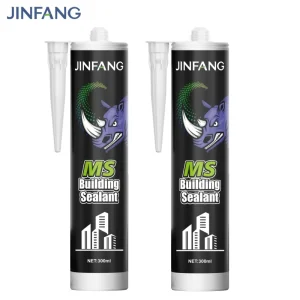
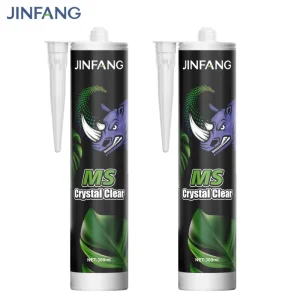
| MS Polymer Sealant | Silyl-Terminated Hybrid Moisture Cure | High (±50% joint movement) | Exceptional (No bubbling during cure in high humidity) | Exterior cladding joints, dynamic facades, green building |
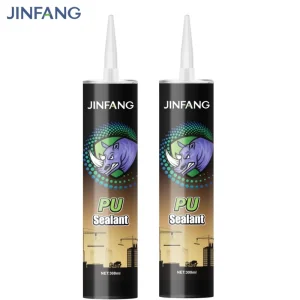
| Polyurethane (PU) Sealant | Isocyanate Crosslinking Moisture Cure | High (±25% movement) | Good (Requires careful surface preparation to avoid moisture outgas) | Roadway joints, concrete precast, heavy civil works |
| Neutral Silicone Sealant | Alkoxy/Oximino Moisture Cure | Very High (±50% movement) | Excellent (Inherent UV and high-temperature tolerance) | Structural glazing, glass facades, window frame perimeters |
At Shandong Jinfang, we recognize that a standard, off-the-shelf product may not meet the exact parameters of every mega-infrastructure project or regional market. We provide comprehensive OEM capabilities, enabling procurement managers and distribution networks in Ho Chi Minh City to customize both chemical performance and packaging:
Adjust open time, viscosity, cure rate, and temperature performance envelope. We can formulate ultra-fast skinning sealants for rainy climates or low-viscosity formulas for high-speed industrial lines.
Available in 300ml cartridges, 590ml/600ml foil sausages, or bulk drums for industrial assembly lines. We support custom-designed offset and screen printing for brand-focused distribution channels.
Fully compliant with global industrial certifications, engineered for reliable curing under variable climate stresses
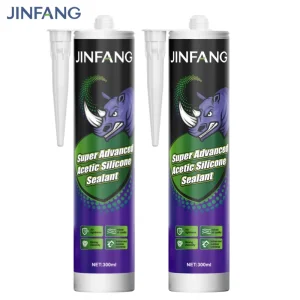
Answers to critical questions on dynamic chemical crosslinking, curing dynamics, and shipping logistics in tropical climates
For solvent-based or solvent-free dispersion-based nail-free adhesives, high ambient humidity can slow down the evaporation of carrier agents, slightly extending the open time. However, for our reactive moisture-curing adhesives (such as MS polymer or polyurethane systems), water molecules in the air act as the curing agent. In high-humidity conditions (e.g., 80%+ RH in Saigon), these reactive formulations cure *faster* without losing tensile strength, as the cross-linking acceleration has been chemically compensated to prevent mechanical embrittlement or surface bubbling.
While polyurethane sealants possess high mechanical tensile strength, they are susceptible to ultraviolet degradation. Under the intense UV index (10+) typical of southern Vietnam, polyurethanes can chalk, crack, and lose elasticity over 3-5 years. In contrast, MS Polymers feature a hybrid polyether backbone that is highly resistant to UV radiation. Furthermore, because PU curing releases trace amounts of carbon dioxide gas, applying PU in highly humid tropical environments can lead to micro-bubbling inside the joint, which compromises structural adhesion. MS Polymers do not release gas during curing, ensuring uniform density.
We operate a fully integrated, automated PLC control compounding system. Temperature, shear mixing velocity, and vacuum dehumidification levels are dynamically monitored and logged. Every raw material batch is subjected to rigorous spectrophotometer and viscometer testing before compounding. Through our deep R&D partnerships with Shandong University and Xiamen University, we employ advanced gas chromatography and mechanical testing rigs to confirm that all finished products meet our strict technical specifications before loading and export.
When stored in their original unopened packaging in dry, shaded spaces under 30°C, our silicone and MS Polymer sealants maintain a shelf-life of 9 to 12 months. To prevent premature cross-linking due to tropical heat during storage, Jinfang utilizes custom high-barrier aluminum-laminated polymer cartridges and double-barrier foil sausages, which block moisture vapor transmission. We recommend distributors and construction sites maintain first-in, first-out (FIFO) inventory protocols and prioritize temperature-controlled storage where possible.
Our agile logistics system ensures shipment processing in an average of 15 business days from order confirmation to ocean loading. We maintain strategic partnerships with global carriers to provide direct, refrigerated (reefer) or standard container shipping to Cat Lai Port. Our documentation team prepares all required certificates of origin (such as ASEAN-China Free Trade Area Form E) to minimize customs clearance times, helping local distributors manage their projects without delays.
 Jinfang